
When people are just starting out with running, they tend to make the most mistakes. Underestimating their body, giving in to their ego and many more. At the same time, though, running is also where you can most effectively get rid of beginner’s mistakes, provided you don’t underestimate anything.
Running is the basic form of human locomotion. It comes naturally to us, and over time, depending on the era, it fades away and reappears. Horace already claimed: “If you don’t run while you’re healthy, you’ll run when you fall ill. No medicine can replace movement.”
Running isn’t meant to replace other sports, but it is one of the most accessible ways of restoring our health. It increases resistance to diabetes, cancer and other lifestyle diseases.
Among other things, running releases endorphins in our body, which bring a feeling of contentment and joy. So if you go for a run in the morning before work, there’s a good chance you’ll be more productive and in a more positive mood at work.
Effort and exertion are part of sport, but at the same time we mustn’t forget that the intensity has to be appropriate. Overly demanding training sessions can ruin your idea of running, create a poor running pattern and overload our body.
We have to prepare our body for any physical activity. People who start running at an older age should definitely have a check-up with a doctor, which isn’t ruled out for younger people either, or for those who have problems with the cardiovascular system and the musculoskeletal system. Once you’ve got the go-ahead from your doctor, you can start running itself, or rather preparing for it.

Getting started
At the start, you need suitable running shoes. Given the factors that can count against running, suitable footwear is one of the most important pillars. People who are overweight should first start with slow walking instead of running, done for 20-40 min., roughly 3x a week.
We also mustn’t forget that miracles don’t happen overnight. If you run for 20-30 min. on a daily basis without any experience, you could even hurt yourself if the negatives mentioned above apply. That’s why you also need to focus on preparation and regular training.
Those who already have experience with sport but have put on a little weight can start running on a daily basis straight away and can also set their goals.
Running also develops our body’s aerobic capacity (when walking and running at the aerobic threshold, we’re able to talk and pronounce words clearly). The truth remains, however, that not everyone has the same aerobic threshold values. To find out these values, it’s a good idea to visit a sports doctor or buy a watch designed for running, ideally with a chest strap, so you have more accurate data available and can determine your heart rate or keep a record of your training sessions.
How to optimise running and other sports with functional training?
Setting the right running goal based on your current health…
If you’re overweight and also have cardiovascular problems and problems with the musculoskeletal system, it’s a good idea to seek help from a doctor, physiotherapist or trainer and discuss your condition with them. If it’s a case of excess weight and possible heart problems, regular blood pressure monitoring and setting up a meal plan with the help of an expert should clearly be the first step.
Before you start running, start with just a 20-40 minute walk. Set your speed by feel, and once you have the basic “equipment” mentioned in the previous paragraphs, keep an eye on your heart rate and keep it up to 130 BPM (beats per minute).
Don’t try to beat these values from one day to the next. Start with three sessions a week first, and gradually increase the number week by week, but don’t change the intensity and volume (always stay at the heart rate mentioned). After 2-3 weeks you’ll get to moving on a daily basis, you’ll be training 5 times a week, feeling good and nothing will hurt. WELL DONE, THE FIRST MILESTONE IS BEHIND YOU AND YOU CAN MOVE ON.
Increase the length of your training, or rather the distance, by 10% week by week. Another important factor is the choice of surface you start running on. There’s no need to rush straight into running on concrete.
Start on softer surfaces such as tartan tracks, cinder tracks or forest paths. Don’t forget that it’s very important to create the optimal environment in our body so that the organism can adapt to handling higher training demands. Set yourself long-term goals, which are the key to success. Record every training session, the distance, the pace and the feelings you had during the session.
The fact is that you burn more calories running than walking. Running results in the so-called “afterburn”, which means that when you run at a higher speed, our body can burn calories more efficiently even after the run is over.
I want to lose weight and learn to run properly, I don’t have any health problems
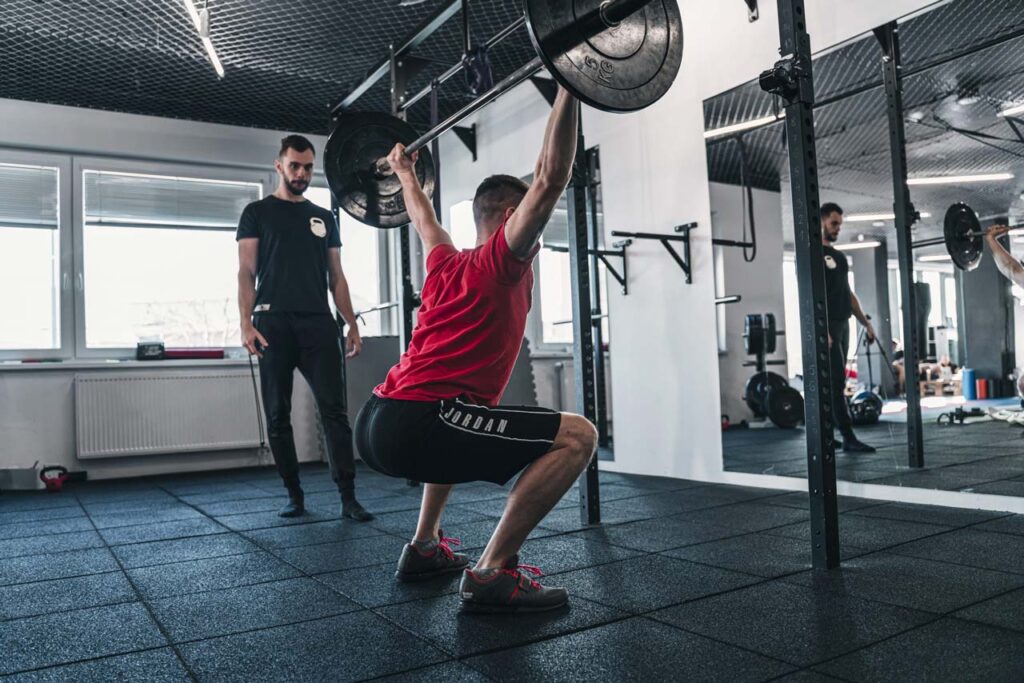
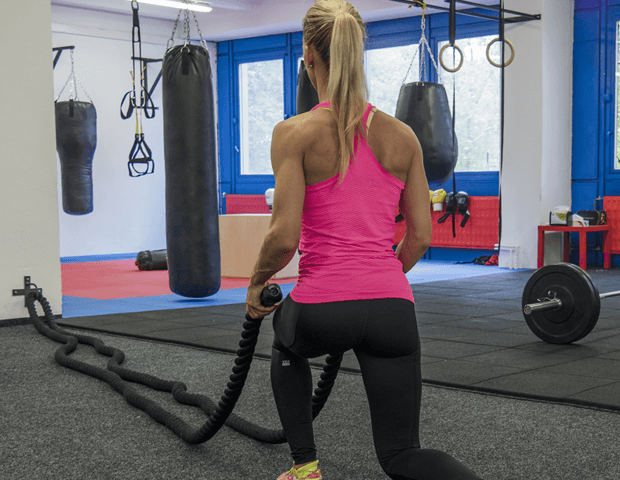
To lose a few kilos as effectively and safely as possible through running, or through movement as such, you should also include strengthening your own body in your training. Focus on functional training, which is the most effective means of developing a person in all areas of life. Each of us needs to control our own body in certain ways, physically as well as mentally and emotionally. Including functional training will make you a stronger runner and at the same time reduce your risk of injury. Running is demanding on the joints, and if you don’t have the muscles to support them, you could get injured. Combining running with functional training is therefore an inseparable part.
I want to make running part of my life and optimise my training demands as part of my preparation
If you want to add running to your current sports preparation, whether for swimming, weight loss, football, fitness, CrossFit or optimising endurance performance, you need to be aware of the structure of the sport in question. That’s because the specifics of the given sport determine which abilities you need to develop to achieve better performance, endurance, speed of movement or to achieve recovery.
Endurance can be developed aerobically or anaerobically. We understand aerobic capacity as a state that lasts longer and in which we don’t get very out of breath. In this state, our heart rate doesn’t exceed an average of 130-150 BPM (beats per minute), although it should be noted that each of us has individual values, depending on the state of our body. There are also situations where an individual’s aerobic threshold can’t be determined (e.g. if they can’t run 3 km at a steady pace). We understand anaerobic capacity, or rather the anaerobic threshold, as the zone in which our body can no longer be supplied with oxygen effectively, or as the highest possible intensity of load lasting 40 to 60 minutes. It helps us adapt to a higher running speed at a lower heart rate.

Running warm-up
When you’re starting out, you should do a running warm-up before every run. It adds variety and teaches you the correct running technique. A running warm-up lets you find out your shortcomings when running, such as which part of your foot lands on the ground: whether you land on your heel, on the outer or inner part of your foot, or on your toes. With correct running technique, you should land on the middle part of your foot, closer to the toes.
If you land on your heel, there can be greater stress on your joints, and you should get rid of this incorrect technique as soon as possible. Landing on the inner part of the foot indicates instability and weakness of your ankle, or rather your calf muscles. If you land on the outer side of the foot, sooner or later knee pain may catch up with you, just as when you land on your heel. With this form of landing, the patella (kneecap) ends up in the wrong position and the calf muscles don’t work properly.
A running warm-up takes 15-30 min., depending on the runner’s level. It starts with slow running (approx. 10 min.), followed by a dynamic warm-up/mobilisation, the running ABC and finally short runs, so-called strides, 60 to 100 metres long with a gradually increasing pace.
For a beginner, slow running can mean a slow jog without getting out of breath.
By a dynamic warm-up we mean actively stretching the muscles needed for running, not static exercises, which on the contrary dampen our muscle fibres.
Probably every one of you has already seen the running ABC. It consists of basic locomotor and rhythmic elements of the lower limbs combined with movements of the upper limbs (always the opposite side, in an X shape).
If a beginner’s physical abilities don’t allow them to run continuously, they can easily alternate slow running with walking, e.g. 100 metres jogging and 200 metres walking.
Running ABC
Walking on your heels
Walking on your toes
Running walk
Running walk with a double rhythm
Calf-raise walk
Skipping
- low skipping
- medium-high skipping
- high skipping
- heel flicks
- straight-leg kicks
Do the short runs at least 6 times, 60 to 100 metres each. Start at a gentler pace and increase it gradually so that you can concentrate on the basic movements and correct technique.
These are simple but very beneficial exercises that are tools for preventing injury and improving running technique.
You have many options and variations available.
Don’t forget that the foundation of all exercises is learning to do them correctly and the need to master them.