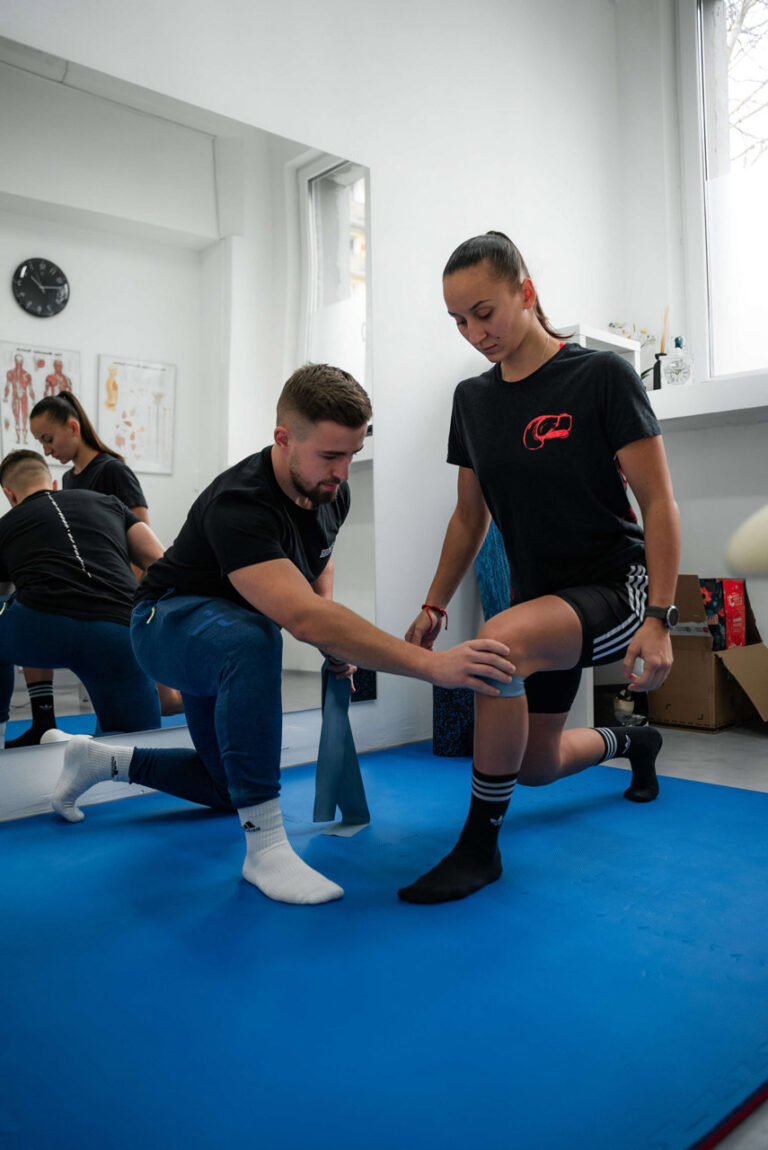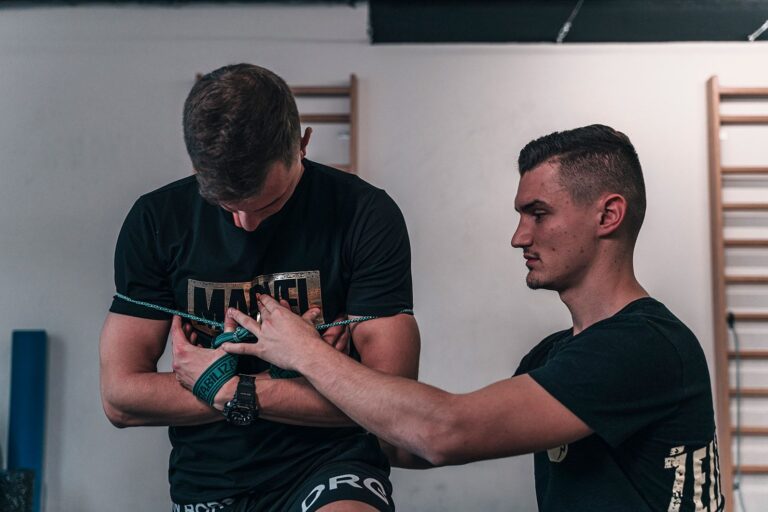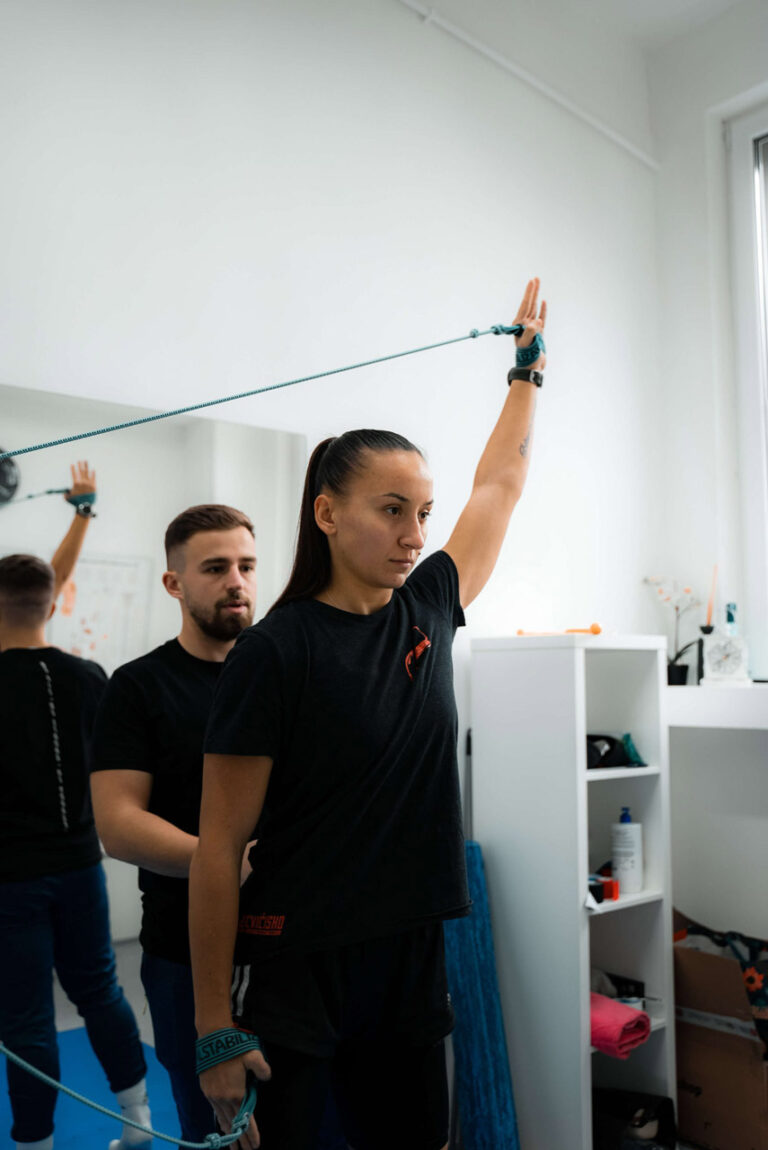






DNS stands for Dynamic Neuromuscular Stabilization, a diagnostic and therapeutic concept based on the principles of developmental kinesiology. It draws on observing a child’s motor development and the way trunk stability, support and movement coordination gradually form during the first years of life.
DNS uses positions typical of individual developmental stages, for example lying on the back, on the stomach or on the side, the position on all fours, sitting or standing. The goal isn’t just to imitate these positions, but to use them to work on breathing, trunk stability, support and movement coordination.
What DNS focuses on
DNS focuses mainly on:
- trunk stability and control
- coordination of breathing and movement
- quality of support
- coordination of individual parts of the body
- movement strategies in different positions and under load
When we use DNS
The concept is used in physiotherapy and in training, especially when working with people with back pain, movement control problems or during a gradual return to load.
At Cvičisko, we see DNS as one of the tools that can be useful depending on a person’s specific problem and needs. The goal isn’t to get everyone into one “ideal” position, but to help them handle movement and load better.
DNS complements the SM System and postural training well. If you’re not sure what’s right for you, start with diagnostics.